

हिताहितं सुखं दुःखमायुस्तस्य हिताहितम् ।।
मानं च तच्च यत्रोक्तमायुर्वेदः स उच्यते । च.सू. 1/14
आयुरस्मिन् विद्यते, अनेन वाऽऽयुर्विदन्ति” इत्यायुर्वेदः ।। सु.सू. 1/15
Ayurveda, the science of life and longevity has a history as long as a human civilization and even beyond. Ayurveda is made up of two Sanskrit words: Ayu which means life and Veda which means the knowledge of.
To know about life is Ayurveda. “Ayu” or life is comprised of four essential parts - The combination of mind, body, senses and the soul.
शरीरेन्द्रियसत्वात्मसंयोगो धारि जीवितम् ।
नित्यगश्चानुबन्धश्च पर्यायैरायुरूच्यते ।। च.सू.1/42
Ayurveda is believed to be eternal. Ayurveda is considered as the medical knowledge of heaven descended to earth.
Ayurveda avataran or the procurement of the knowledge of Ayurveda has been described with interesting tales through Indian mythology.
There are two important legends which are mainly discussed.
The first one follows the Daivya Parampara from the Aatreya Sampradaya (or the School of physicians) and the second one is the mythological tale from puranas which follows the Dhanvantari Sampradaya (or the School of surgeons).
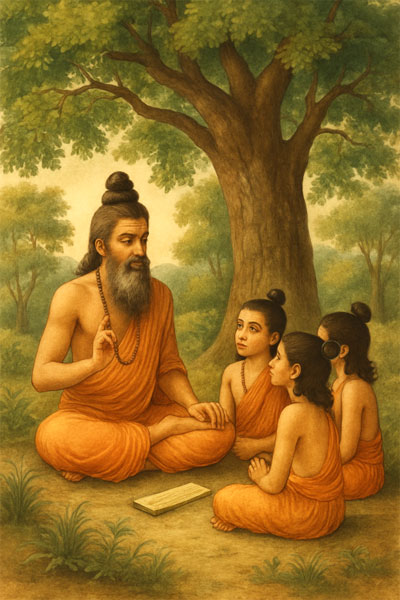
According to Daivya parampara, Ayurveda was brought to earth from Brahma. Brahma is known in Indian mythology as creator of the universe. Brahma stole knowledge from every direction and prepared his own book of Brahmasutra. The Brahmasutras were passed on to Daksha Prajapati in 100,000 verses. Daksha Prajapati passed on the knowledge of Ayurveda to twin brothers Ashwin kumar. Ayurveda was inherited by Lord Indra from Ashwin kumar, and then it was passed on to the Sage community headed by Bharadwaj and then on to their disciples.
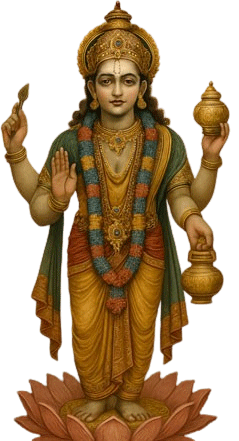
According to Dhanvantari Sampradaya, Ayurveda was obtained in the Samudramanthan (churning of Ocean) with Dhanwantari. Dhanwantari emerged with Nectar in one hand and Ayurveda in another hand. Thus, Dhanwantari is worshiped as God of Ayurveda.
Its written history takes definite shape from the codification of hundreds of slokas of Ayur-Vedic wisdom into ‘Samhitas’. The highly integrated approach of Ayurved can be gauged from the manner in which Ayurvedic treatment was divided into eight segments like
- Kaya Chikitsa (General Medicine)
- BalaChikitsa (Pediatrics)
- Graha Chikitsa (Psychiatry)
- Urdgwanga Chikitsa (ENT, Ophthalmology)
- Shalya Chikitsa (Surgery)
- Damshtra Chikitsa (Toxicology)
- Jara Chikitsa (Geriatrics)
- Vrishya Chikitsa (Aphrodisiac Treatment)
Ayurveda is a complete medical system which recognizes that ultimately all intelligence and wisdom emanates from one absolute source (Paramatma). Health occurs by the grace of the Absolute through the laws of Nature (Prakriti).
Ayurveda helps Nature by living a life of balance according to Nature’s law. Ayurveda is not focused on symptoms, but rather on establishing and maintaining balance of life energies within us.
Ayurveda recognizes the constitutional differences of all individuals and therefore prescribes different regimens for different kinds of people. Ayurveda aims at healing the fragmentation of the mind-body complex and restoring wholeness and harmony to all people.
Basic principles of Ayurveda
Ayurveda is a Sanskrit term for “knowledge of longevity or Life”. Ayurveda is a science dealing not only with treatment of some diseases but is a complete way of life. The two most important aims of Ayurveda are
स्वस्थस्य स्वास्थ्यरक्षणमातुरस्य विकारप्रशमनं च ।। च.सू. 30
- To maintain the health of healthy people
- To cure the diseases of sick people.
Sushruta defines healthy person as Swastha
समदोषः समाग्निश्च समधातुमलक्रियः ।
प्रसन्नात्मेन्द्रियमनः स्वस्थत्यभिधीयते ।। सु.सू 15/41
One who possesses the equilibrium of Doshas (the triad of physiological functional elements), with adequate functioning of Dhatus (body tissues), Agni (metabolic enzymes and digestive functions), Mala (metabolic by- products and excretory functions), and gratification of Indriya (sensory modalities), Manah (mental faculty), and Atma (self). Thus health is not only attainment of physical wellbeing but also mental and spiritual happiness.
There are three main causes for the diseases i.e., Asatmendriyartha Samyoga, Prajnaparadha, and Parinama / Kala. The Atiyoga, Ayoga and Mithyayoga of these three factors are main cause for all the diseases where as their Samyakyoga leads to health.
The primary motto of Ayurveda is the preservation and promotion of health. In this regard we find the explanation of Dinacharya, Ritucharya, Sadvritta, Swasthavritta, Ahara Vidhi Vidan, Nindra etc.
Some key concepts in Ayurveda
- Panchamahabhuta
- Tridosha
- Triguna
- Saptadhatu
- Mala
- Agni
- Kostha
- Prakriti
- Pariksha
- Vyadhi
- Chikitsha
- Dinacharya
- Ritucharya
